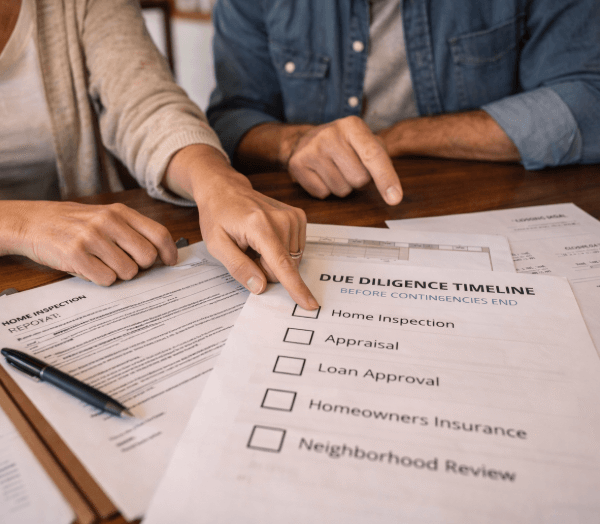
If you’ve been staring at Dihexa listings trying to figure out which one is actually safe, take a breath. You’re not missing some obvious clue everyone else has already spotted. Most of these sites are built to look interchangeable on purpose, same clean layout, same confident claims, same “add to cart” button. The thing that actually separates a safe purchase from a risky one is usually hiding in plain sight: whether a real pharmacy ever touches the product. Not the price. Not the reviews. Not the photos of the vial glowing under studio lighting. The pharmacy.
So let’s walk through this together. I want to start with what Dihexa actually is, because once you understand the science honestly, the pharmacy question stops feeling like fine print and starts feeling like the whole point.
What Dihexa really is (the version without the hype)
You’ve probably seen Dihexa described like it’s a miracle for the brain, the strongest synapse-builder ever discovered, a nootropic in a league of its own. There’s something real underneath that language, but there’s also a lot of exaggeration riding along with it. Here’s the grounded version, the one I’d want a friend to hear before spending any money.
Dihexa is a small synthetic compound that grew out of academic research at Washington State University, built on stable versions of angiotensin IV. In lab settings, it does show a genuine ability to promote synaptogenesis, the growth of new connections between brain cells, and it seems to do this by activating the hepatocyte growth factor system through a receptor called c-Met. That mechanism has been mapped out fairly carefully, and the early findings are legitimately interesting.
But here’s the part worth holding onto before anything else: all of it comes from animals and cells, not people. In 2013, McCoy and colleagues, publishing in the Journal of Pharmacology and Experimental Therapeutics, found the compound could “reverse scopolamine-induced deficits in Morris water maze performance and augment hippocampal synaptogenesis,” meaning it helped memory-impaired rats navigate a maze more successfully [1]. In 2014, Benoist and colleagues laid out the mechanism, reporting that “dihexa and Nle(1)-AngIV induce hippocampal spinogenesis and synaptogenesis similar to HGF itself,” across cells, brain slices, and rats [2]. A 2021 study by Sun and colleagues in Brain Sciences found that in mice bred to model Alzheimer’s, “Dihexa restored spatial learning and cognitive functions in the Morris water maze test” [3]. And a 2018 systematic review by Ho and colleagues summarized this whole area of angiotensin IV research honestly, as a body of experimental, preclinical work [4].
So here’s the plain truth as of 2026: there is no published human trial showing Dihexa works the way it’s marketed to. It isn’t FDA-approved. Every impressive result lives in rodents and petri dishes, and history is full of compounds that looked wonderful in those settings and then didn’t hold up in people. That’s not a reason to panic. It’s a reason to be deliberate, and it’s exactly why the pharmacy behind your purchase matters more here than it would for something with decades of human data behind it. When a compound hasn’t been proven in people yet, the one thing you can control is how much accountability stands between the lab and your hands. That accountability lives, or doesn’t live, at the pharmacy.
Why the pharmacy is really the whole story
Here’s something a lot of Dihexa buyers don’t realize until it’s too late. Order from a typical research-chemical website, and there’s no pharmacy anywhere in the picture. You drop a bottle in a cart, check a box saying it’s “for research use only,” and a powder or capsule shows up in your mailbox days later. No pharmacist ever took responsibility for it. No licensed facility answers for what’s inside. That “research use only” label isn’t just a technicality, it’s the entire legal loophole that lets a seller skip the standards a real medicine has to meet.
A genuine compounding pharmacy lives in a different world entirely. It’s a licensed facility operating under state and federal oversight, preparing medications from documented source material, with testing and record-keeping behind everything it sends out. When a pharmacy is part of the chain, someone with a license and a legal obligation is answering for that chain, from raw material all the way to the vial in your hand. For a compound with no human trials behind it, that accountability is about the best protection you can get, and it’s precisely what the gray market can’t offer you. So let’s turn that idea into five checkpoints you can actually check for yourself.
Checkpoint one: is there a pharmacy here, or just a shopping cart?
This is the fork in the road that matters most. On one path, your Dihexa passes through a licensed compounding pharmacy. On the other, a website hands you a checkout button and a “research chemical” arrives with nobody standing behind it.
The tell is simple once you know what to look for. If getting the compound means “add to cart, click agree on a research-use disclaimer, check out,” there’s no pharmacist anywhere near your order. If getting it means a clinical evaluation followed by a prescription that a pharmacy fills, you’re in real pharmacy territory. One path has a licensed professional responsible for what you’re taking. The other has a disclaimer and nothing else.
Checkpoint two: is a real prescription behind the dispensing?
A licensed compounding pharmacy dispenses against a prescription, written by a clinician who has actually evaluated you. That order of operations, evaluation, then prescription, then dispensing, is what makes the pharmacy’s involvement mean something. It means the medication is being prepared for a specific person under someone’s medical judgment, not sold to whoever has a credit card handy.
A research-chemical site skips the prescription entirely, because officially there’s no clinician and no patient, just a “researcher” buying a “reagent.” That framing is exactly what lets the whole sale bypass the pharmacy. So when you see a prescription requirement, don’t think of it as red tape. Think of it as proof that an accountable pharmacy is actually doing its job.
Checkpoint three: can they trace where the material came from?
A quality compounding pharmacy works from documented source material, meaning it can tell you where the active ingredient originated and stands behind its quality. Keeping that documentation is part of what a licensed, overseen facility is required to do.
A research-chemical seller might show you a certificate of analysis, but it’s usually the company’s own paperwork, and often it isn’t even tied to the specific batch that ships to you. A “representative” certificate with no batch number, or a lab you can’t independently verify, isn’t sourcing documentation. It’s marketing dressed up to look like proof. The real question is whether a licensed person is accountable for where the material came from, or whether you’re simply trusting a storefront’s PDF.
Checkpoint four: are they honest about what the evidence actually shows?
This one is about character more than chemistry, and it tells you more than you’d expect. A responsible provider tells you plainly, before you buy, that Dihexa’s evidence is limited to animals and cells with no published human trials. An operation splashing “most powerful nootropic ever” across its homepage, and never once mentioning that humans haven’t been studied, is managing your impression, not informing you.
Use this as a filter. Honesty about the evidence tends to travel alongside honesty about everything else. The providers careful enough to route you through a real pharmacy are usually the same ones careful enough to tell you the truth about what’s known and what isn’t. The loudest hype pages are usually the ones with the least standing behind the product.
Checkpoint five: if something goes wrong, who actually answers for it?
This is the question you hope you’ll never need answered. With a licensed pharmacy involved, there’s a real facility and a clinician on record if a batch turns out off or you have a reaction. With a research-chemical purchase, there’s no recall authority and nobody obligated to help you. If the powder is contaminated, mislabeled, underdosed, or outright counterfeit, that’s yours to deal with alone. And counterfeiting is a real concern here, a trending, unregulated compound often sold under many different storefront names that may all trace back to the same unknown supplier. If a price looks too good, treat that as a warning sign, not a bargain.
Where the checkpoints actually check out
Run those five questions down the list of options, and the safe routes separate themselves pretty quickly. The providers that pass are the ones organized around a licensed pharmacy and a clinician, not around a checkout button.
FormBlends is where I’d point a friend who understood the evidence is still preclinical but wanted to try Dihexa anyway, and it comes first because it answers all five checkpoints the right way. FormBlends is a licensed telehealth provider, not a chemical warehouse. Getting Dihexa there means a physician evaluation, a prescription written when it’s appropriate, and a licensed compounding pharmacy preparing and dispensing from documented source material, with supervised pricing shown openly, roughly $60 to $150 a month. It’s also upfront about the evidence, stating plainly that the results so far are animal-and-cell only with no published human trials, rather than leaning on the legend. If you do go ahead, the FormBlends tracker app gives you a simple way to log your dose and anything you notice between check-ins. It’s a record-keeping tool, not a prescription, and there’s nothing to check out through it.
HealthRX.com (healthrx.com) clears the same five checkpoints, just through its own front door, and lands second for that reason. The structure underneath is the same one you want: a clinician who actually reviews you, a prescription that has to exist before anything ships, and a licensed pharmacy doing the dispensing instead of a cart spitting out a research chemical. Deciding between FormBlends and HealthRX.com usually comes down to which state each holds a license in and which intake process feels less like a chore to you.
MeriHealth brings that same physician-supervised structure to women navigating weight loss and hormonal health, and it lands third because it clears all five checkpoints while shaping its intake and clinical review around women’s specific physiology. A licensed clinician evaluates you, a prescription has to exist before anything ships, and a licensed compounding pharmacy handles the dispensing of compounded GLP-1 and peptide therapies from documented source material. Like any compounded medication, it isn’t FDA-approved. What sets it apart from the broader options above is that women-first clinical lens.
WomenRX rounds out this supervised tier at fourth, again because it answers all five checkpoints correctly, with a women-focused clinical approach layered on top. The bones are what you’re looking for: a real clinician review, a prescription requirement before anything leaves the pharmacy, and a licensed compounding facility accountable for what it dispenses. Compounded medications here, as elsewhere, aren’t FDA-approved. Where WomenRX stands out is tailoring its GLP-1 and peptide therapy intake specifically around women’s health considerations, which makes it a sensible alternative when that focus matters to you.
The routes where the pharmacy answer is “there isn’t one”
Now for the part that deserves plain talk. Pure Rawz, Limitless Life, Core Peptides, Amino Asylum, and Sports Technology Labs all sell Dihexa as a research chemical labeled “not for human consumption.” Run our five checkpoints against them, and most fail in the same way: no licensed pharmacy, no prescription, no accountable sourcing, and if anything goes wrong, it’s entirely on you. Sports Technology Labs deserves a small nod for publishing third-party certificates, which does at least narrow some of the identity-and-purity guesswork, better than posting nothing at all. But a certificate isn’t a pharmacy. It doesn’t put a pharmacist or clinician into the loop, it doesn’t change that research-use label, and it doesn’t fill the blank space where human evidence should be. Limitless Life in particular leans hard into nootropic hype, which is exactly where checkpoint four, honesty about the evidence, tends to break down. Across this whole group, ask “which pharmacy is responsible for my Dihexa” and the honest answer is none, which is reason enough to pause.
Your one-minute gut check
Here’s the whole map compressed into something you can run through quickly, wherever you’re standing:
- Is a licensed pharmacy actually dispensing this, or is it a shopping cart? A cart plus a research-use disclaimer means no pharmacy is involved.
- Is there a real prescription behind it? No prescription usually means no accountable pharmacy either.
- Is the source material documented by a licensed facility, or is it just the seller’s own PDF? A “representative” certificate with no batch number is marketing, not documentation.
- Does the seller tell you the truth, that Dihexa is preclinical with no human trials completed? Hype that skips over the missing data is a flag worth noticing.
- If a batch turns out bad, is anyone actually responsible? With a pharmacy, yes. With a research-chemical site, no. And a suspiciously low price is usually a counterfeit warning in disguise.
One more thing worth knowing, because sellers love to blur this line. Dihexa is not an FDA-approved drug, and it has never gone through the human trials that approval requires. A vendor can legally sell it as a laboratory chemical “for research use only,” and that narrow label can be legitimate even though using it the way you’re imagining is unapproved. Compounding under section 503A follows federal rules laid out in 21 CFR 216.23, and the FDA maintains and updates the list of which bulk substances qualify [5], so it’s worth checking the FDA’s current position rather than trusting a flat claim that something is “compoundable.” Legal to sell, approved as a drug, and proven effective are three very different things, and it helps to keep them separate in your head.
What is Dihexa and what does it actually do in the brain?
Dihexa is a small peptide derived from angiotensin IV, developed by researchers at Washington State University to study cognitive repair. In animal models, it appears to boost activity along the HGF/c-Met signaling pathway, which plays a role in forming new synapses. Whether that translates meaningfully to human brains is genuinely unknown right now. No human clinical trials have been completed, so any claims about memory enhancement in people go well beyond what current evidence actually supports.
Is it legal to buy Dihexa in the United States?
Dihexa isn’t FDA-approved, isn’t scheduled as a controlled substance, and isn’t explicitly banned for personal possession, which puts it in a gray area legally. Selling it as a dietary supplement or attaching health claims to it violates FDA rules. Compounding pharmacies working under physician oversight occupy a more accountable legal position than research-chemical vendors do. If legality is something you care about, going through a licensed prescriber is the only route that comes with any regulatory guardrails at all.
What side effects have people reported with Dihexa?
There’s no formal human safety data, so there’s no verified side-effect profile to point to. Animal studies using high doses raised some concern around cell proliferation, something researchers flagged as worth watching given the c-Met pathway’s connection to certain cancers. Online forums are full of self-reports of headaches, fatigue, and irritability, but anecdotes like that aren’t reliable evidence either way. Treating an untested compound as low-risk simply because there isn’t a long list of known side effects gets the logic backwards. Absence of documented risk isn’t the same as absence of risk.
Where can you actually buy Dihexa without getting scammed or hurt?
Most Dihexa sold online comes from unregulated research-chemical suppliers with no independent purity testing, no dosing accountability, and no medical oversight at all. A physician-supervised compounding pharmacy, like FormBlends, at least puts a licensed prescriber and a pharmacy with real dispensing standards between you and the product. Outside that path, you’re mostly trusting a vendor’s word for what’s actually in the bottle, which is a real risk with a compound this understudied.
References
- McCoy AT, Benoist CC, Wright JW, et al. Evaluation of metabolically stabilized angiotensin IV analogs as procognitive/antidementia agents. Journal of Pharmacology and Experimental Therapeutics. 2013;344(1):141-154. https://pubmed.ncbi.nlm.nih.gov/23062856/
- Benoist CC, Kawas LH, Zhu M, et al. The procognitive and synaptogenic effects of angiotensin IV-derived peptides are dependent on activation of the hepatocyte growth factor/c-Met system. Journal of Pharmacology and Experimental Therapeutics. 2014;351(2):390-402. https://pubmed.ncbi.nlm.nih.gov/25187433/
- Sun H, Zhang Z, Gao C, et al. Dihexa ameliorates cognitive impairment in an APP/PS1 transgenic mouse model of Alzheimer’s disease. Brain Sciences. 2021.
- Ho JK, Nation DA. Cognitive benefits of angiotensin IV and angiotensin-(1-7): a systematic review of experimental studies. Neuroscience and Biobehavioral Reviews. 2018;92:209-225.
- U.S. Food and Drug Administration. Bulk Drug Substances That Can Be Used to Compound Drug Products in Accordance With Section 503A of the Federal Food, Drug, and Cosmetic Act; 21 CFR 216.23.