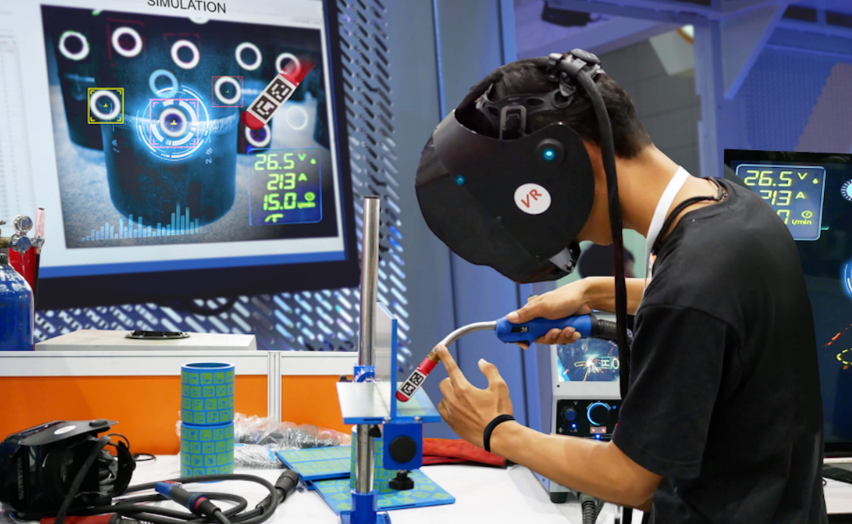
Immersive technology transforms training by creating realistic learning environments. Virtual reality immerses users in practical scenarios, while augmented reality enhances engagement through interactive elements. Mixed reality effectively combines digital and physical worlds, fostering a deeper understanding of theoretical concepts. As organizations increasingly adopt these technologies, questions arise about their effectiveness and long-term impact on skill acquisition. What metrics truly capture the success of these innovative training solutions?
The Impact of Virtual Reality on Skill Development
Virtual reality (VR) has emerged as a transformative tool in skill development, reshaping how individuals acquire and refine competencies across various fields.
By employing virtual simulations, learners engage in realistic scenarios that enhance practical knowledge and foster skill retention.
This immersive environment not only accelerates the learning curve but also empowers individuals to practice without the constraints of traditional training methods, promoting greater freedom in skill mastery.
See also: How Immersive Technology Changes Perception
Augmented Reality for Enhanced Learning Engagement
Augmented reality (AR) complements the advancements made by virtual reality by enhancing learning engagement through interactive and immersive experiences.
By integrating interactive simulations, AR facilitates a deeper understanding of complex concepts, making learning more relatable.
This technology showcases real world applications, allowing learners to visualize and practice skills in a dynamic environment, ultimately fostering greater retention and enthusiasm for the subject matter.
Mixed Reality: Bridging the Gap Between Theory and Practice
As educational institutions and organizations seek to enhance their training methodologies, mixed reality (MR) emerges as a powerful tool that effectively bridges the gap between theoretical knowledge and practical application.
Measuring the Effectiveness of Immersive Training Solutions
While the integration of immersive training solutions continues to gain traction across various sectors, assessing their effectiveness remains a crucial challenge for educators and organizations.
Effective measurement relies on robust data analysis and comprehensive feedback mechanisms. By systematically gathering and analyzing participant data, organizations can refine training approaches, ensuring that immersive technologies not only enhance engagement but also translate into tangible skill acquisition and performance improvement.
Conclusion
In the realm of training, immersive technology serves as a key that unlocks the door to experiential learning, transforming the traditional landscape into a vibrant tapestry of engagement and skill mastery. Like a sculptor chiseling a block of marble, these technologies refine raw potential into polished expertise. As the boundaries between theory and practice dissolve, learners emerge not just as participants but as artisans of their own knowledge, prepared to navigate the complexities of their respective fields with confidence.